



Sedation Dentistry
Nearly 30% of Americans are afraid to go to the dentist. They avoid dental care at all costs, even when they are in pain or discomfort. Sound familiar? Well, it no longer has to be that way. Modern sedation dentistry offers safe, effective, and comfortable treatments for anxious and fearful patients.
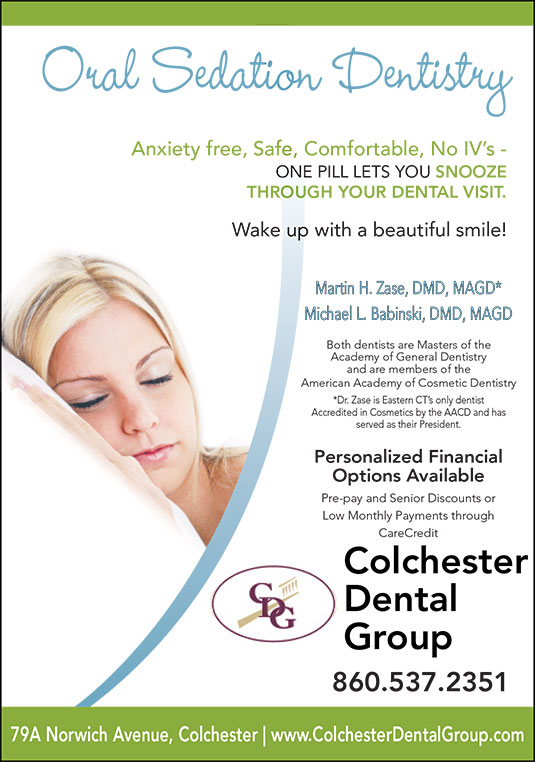
Sedation dentistry – just take a pill
and wake up to a beautiful new smile.
Has the thought of going to the dentist kept you from enjoying a beautiful smile and chewing comfortably? Imagine if you could walk out of the dentist’s office without experiencing any anxiety or discomfort during your visit. It is possible at the Colchester Dental Group!
How does sedation dentistry work?
- We can prescribe an anti-anxiety pill for you to take the night before your appointment so you will sleep well without concern about your dental appointment the next day.
- Conscious, oral sedation is accomplished safely with just one small blue sedation pill — no IV’s are needed. The pill is taken at home one hour before your scheduled appointment. The effects of the pill are quite mild and a little intoxicating. Most people feel very sleepy so you must be driven to the office.
- At our office you will be escorted into a very comfortable room, covered with a thick, warm blanket and monitored by a sophisticated medical instrument called a “pulse-oximeter” to watch your vital signs and make sure that you are completely safe.
- Additional medications are then given to you, by mouth, as needed and you will likely just fall asleep. We can easily wake you to open wider, check your bite or take an X-ray.
- Dr. Zase and Dr. Babinski both have advanced training in sedation dental care. Once you are totally comfortable and quite sleepy, the sedation team will begin restoring your smile and improving your health while you snooze through your dental visit.
- After your treatment is completed, your designated driver will bring you home where you will enjoy a comfortable, relaxing rest of the day, most likely a wonderful nap, and you will have little or no memory of your dental visit.
Who is sedation dentistry for?
- Anyone who has put off going to the dentist because of anxiety, fear or a bad previous experience.
- Anyone who would like to get more work done in less visits.